Event Types · Hotels & Resorts
Hotel and Resort Patio Heating: Covers You Can Seat All Winter
A Charleston hotel's best winter revenue sits outside, and it is the coldest seat in the building. We keep terraces, poolside lounges and inn courtyards sellable from November through April with standing heater routes: units placed before the first service, topped off mid-evening, and pulled or swapped on a schedule your team never has to chase — $130 per heater, per event day, with propane billed per filled tank used. A typical 40-cover terrace runs six to eight mushrooms, and a poolside lawn adds a pyramid pair at the far end of the lounge arc, well back from the coping.
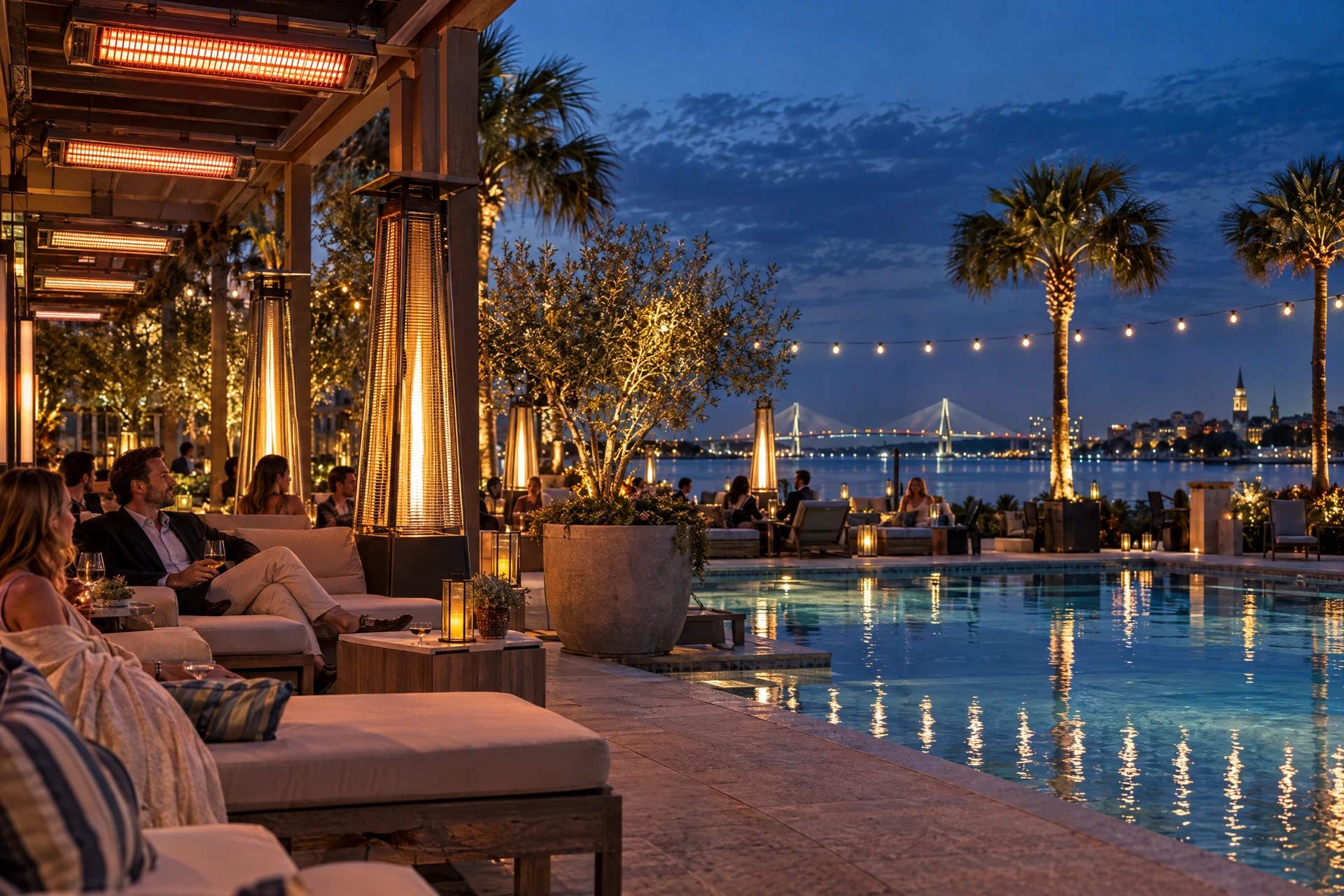
Terrace, poolside, courtyard: three different problems
A rooftop or second-floor terrace usually has wind and a parapet; a poolside lounge has open water, low furniture and long sightlines; an historic inn courtyard has jasmine, brick, wood shingle and a manager who does not want a flame visible from the lobby window. Same four rentals, three different builds.
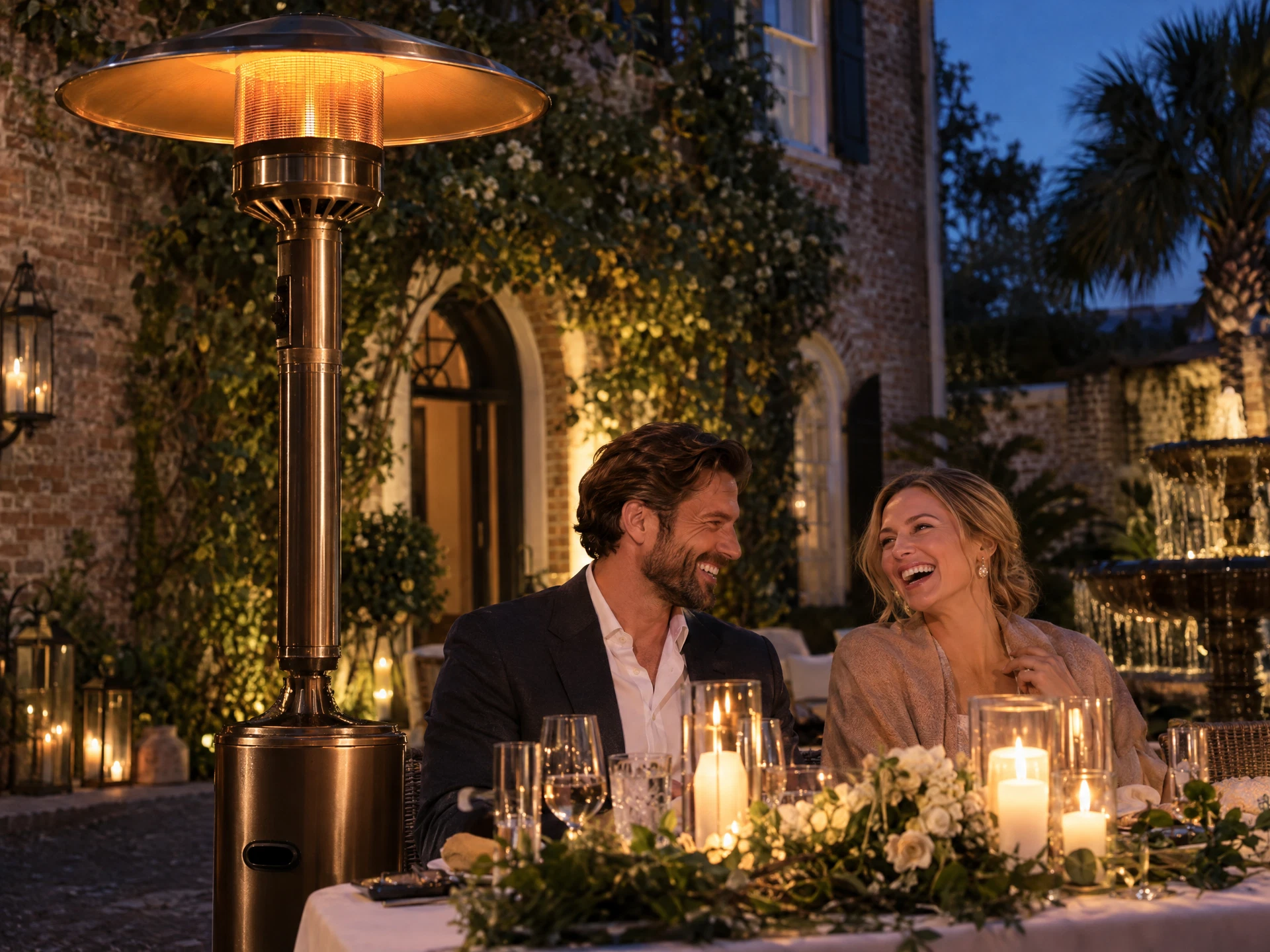
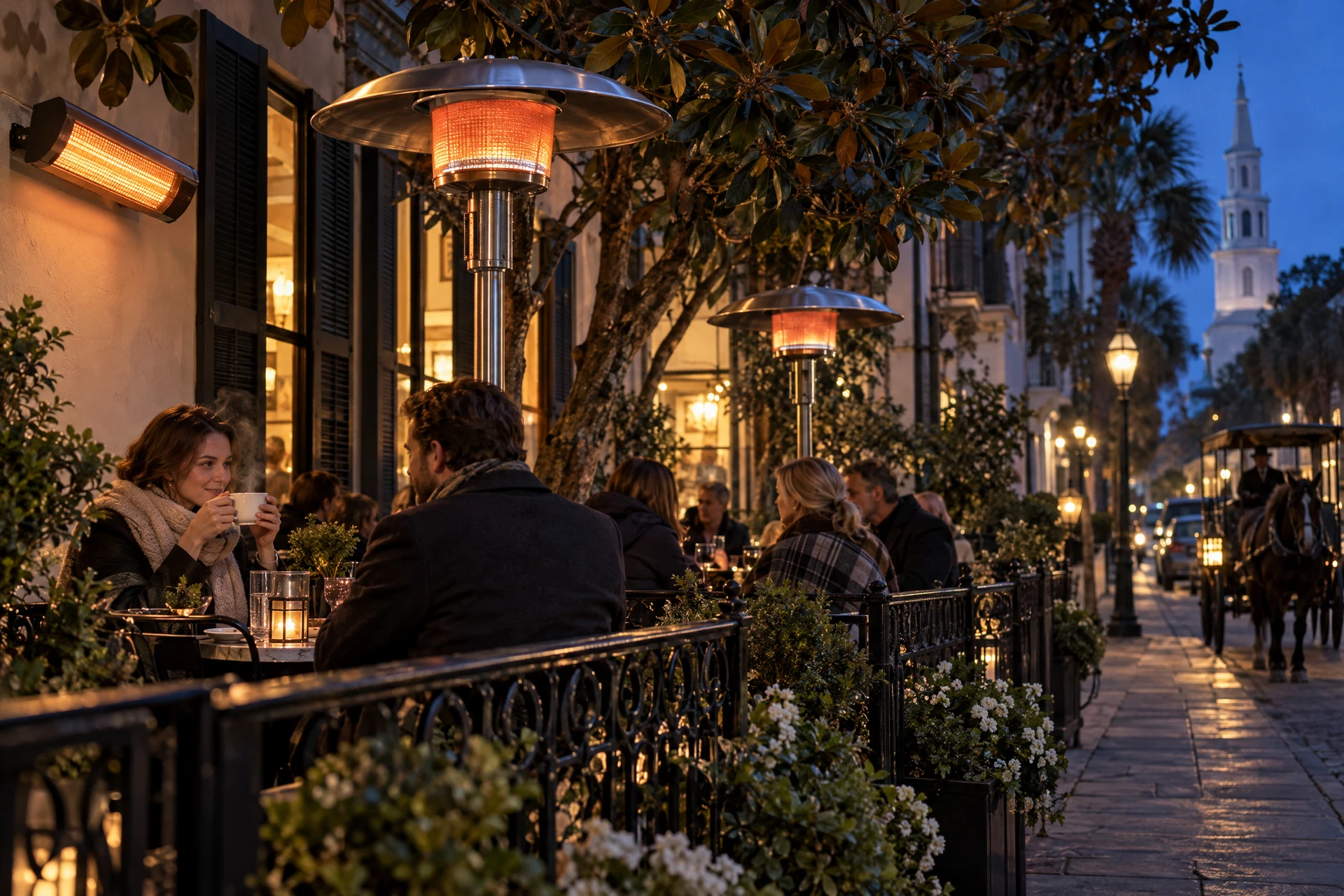
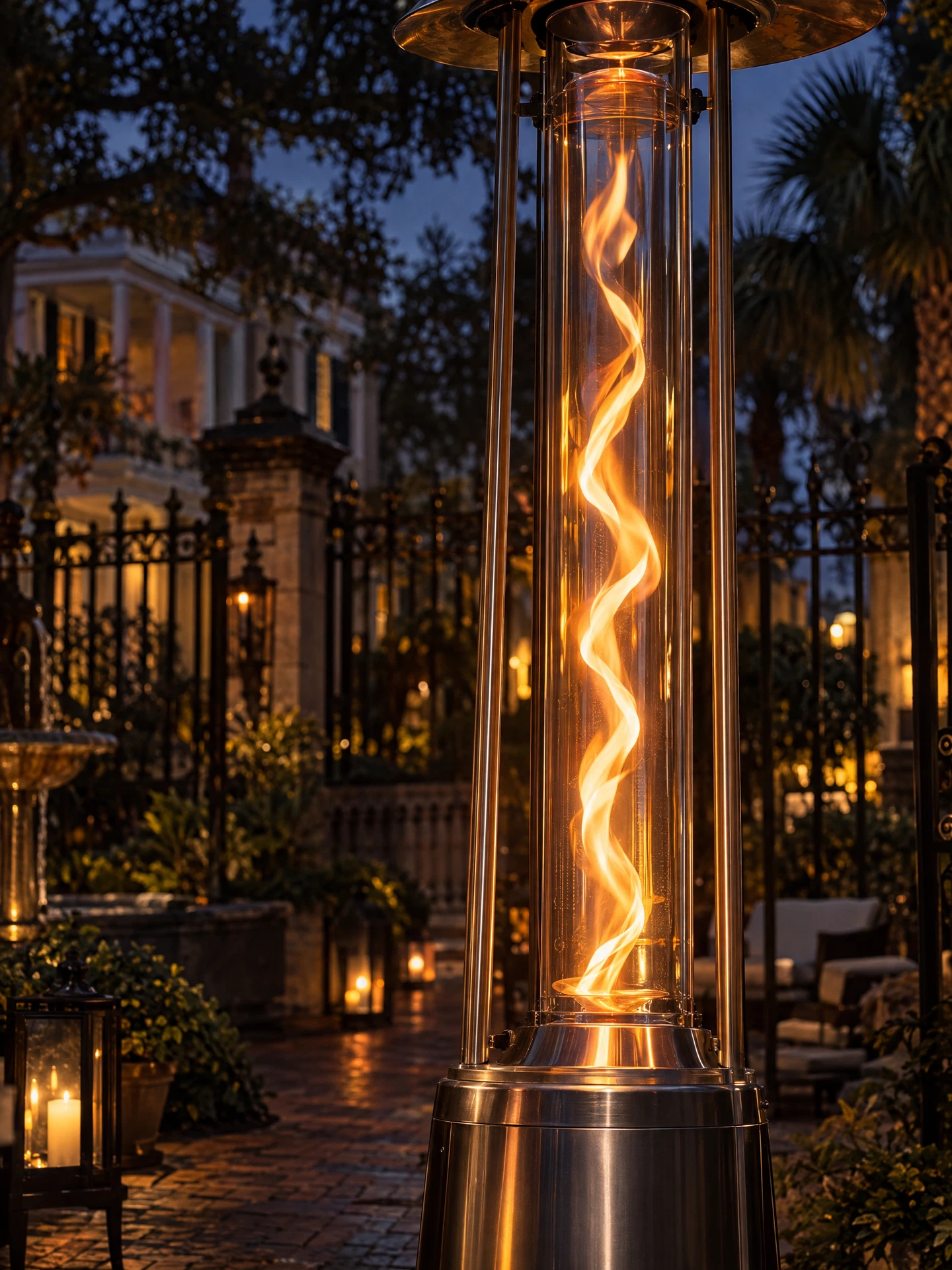
Terraces run on mushrooms — 50,000 BTU each covering an eight-top or 100–150 square feet — with pyramids along the parapet where the flame reads as lighting. Poolside lounges work on placement rather than a different product: nothing with a flame belongs within reach of the coping or a gate path, so pyramids anchor the far end of the lounge arc and mushrooms hold the cabana tables, with the covered bar left as a flame-free zone on the map. Courtyards take the mixed plan — stainless or bronze mushrooms at tables for the thermal work, pyramids at the entrance arch where the flame is the evening's first photograph, and a fire pit table anchoring the lounge corner where the digestifs linger.
Sizing to covers and seat-turns
Hospitality sizing follows the seating plan, not the room count. One mushroom per eight-top or per 6–8 outdoor covers; one per 6-foot long table of six; one per 100–150 square feet of standing bar. Then apply exposure: a terrace on the harbor side gets 1.5 times the seated count, and a courtyard with three brick walls and no prevailing wind gets the base plan.
- 40-cover terrace, ten tables: six mushrooms, two extras for the host stand and the rail queue
- 60-cover rooftop with a bar: eight mushrooms paired 8 ft apart on the windward rail, plus two pyramids flanking the bar
- Poolside lounge, 30 chairs: a pyramid pair at the far end of the lounge arc, four mushrooms at the shaded cabana tables
- Inn courtyard, eight tables: five mushrooms at the rounds plus a pyramid pair at the check stand and aperitivo cart
- Second-floor balcony with flame restrictions: nothing from our fleet — we map it flame-free and heat the terrace below
Placement that reads as architecture, not equipment
Guests notice a heater the way they notice a bad chair. We place to a rhythm the property already has: units aligned to the table grid rather than scattered, columns set off table corners so the reflector looks at seated faces, tanks hidden inside base columns and turned to the shaded side. On a terrace, every unit in a straight line reads as a design decision; the same units staggered read as rental equipment.
Clearance is the operational constraint: 36 inches from umbrellas, drapery, potted palms, cushions, awnings and the green wall someone installed last spring. We keep bases off pool coping and out of gate paths, route cylinders away from any walkway rather than dragging cord across one, and never place against a waterproofing membrane where heat could transfer. Your general manager gets the placement map before the first delivery, so the layout is a property decision rather than a vendor's.
Standing routes, swaps and after-service pickup
A terrace in service is not an event — it is a daily operation, and it needs a route. Our hospitality program places units before the first seating, lights 30–45 minutes ahead of service, checks flame quality and leaks, swaps tanks on the schedule rather than when a server notices, and returns after the season's first cold front to add units where covers are turning away.
Weekday service runs 7am–7pm, with Sunday swaps from 9am–5pm, which covers most dinner services without touching a peak. For a one-night terrace takeover — a private buyout, a wedding block party — the rental behaves like any event build: delivered and lit before doors, picked up on a scheduled window after the last guest, with mid-event attendants available by the hour.
Salt air, flame rules and the cold-table complaint
Coastal service is hard on equipment. Our peninsula, Sullivan's Island, Isle of Palms and Folly Beach clients get stainless bodies wiped and inspected on a standing route, because salt air will find a fastener before it finds a warranty claim. Burners, regulators and ignition systems get checked on every visit, and a unit with a lazy yellow flame comes off the floor rather than staying in service.
The complaint you are actually managing is a guest who says the terrace is cold, and it costs you the covers you turned away in summer. Flame rules at historic properties and upper-floor balconies are real — many restrict open flame indoors and above the ground floor — and our fleet is open-flame propane, so those spaces are ones we will not pretend to equip. What we do is consult on placement that satisfies your rules, mark the flame-free zones honestly on the map, and warm every seat on the ground-floor terrace, courtyard and garden where flame is allowed.
Booking: seasonal contracts and same-week top-ups
For a standing terrace program we start with a free walkthrough — standard at 12 or more units, and genuinely useful on any property with a wind corridor or flame restrictions. The quote comes with a placement map, a per-zone unit schedule and a route calendar, which is the document a GM and an insurance contact both want to see.
Single-event deliveries for hotel clients — a holiday terrace party, a conference reception on the lawn — follow the event calendar: 2–4 weeks ahead on a peak November-through-February weekend, and often same-week for a midweek build when a forecast turns colder than the sales team expected. Those late cold-front calls are the most common thing we do in January, and we have fitted almost all of them without moving another client's gear.
Best for
- Winter terrace and rooftop programs that need to stay sellable
- Historic inns whose ground-floor courtyard can take flame
- Poolside lounges where nothing open-flame belongs near coping
Watch out
- Balconies that ban open flame are not ours to heat — we map them flame-free
- Salt air calls for stainless bodies and a standing inspection route
- Enclosed pool houses and cabanas: no open flame, no exceptions
The hospitality fleet
Four units cover most terraces, lounges and inn courtyards.
Keep the outdoor room sellable all winter
Tell us your date, layout and guest count — the placement plan and quote come back the same business day.
Outdoor rooms, open past October
Frequently asked questions
How many heaters do we need to keep a terrace open in winter?
Size the seating plan: one 50,000 BTU unit per eight-top or per 6–8 covers, one per 100–150 square feet of standing bar, and 1.5 times the seated count if the terrace faces the water. A 40-cover terrace usually runs six to eight units; a 60-cover rooftop with a bar runs closer to ten.
Our property restricts open flame on upper balconies. What works?
Honestly: not our equipment, and we will not sell you a workaround for it. Every unit we rent is open-flame propane, so a balcony rule that bans flame stays a flame-free zone on the placement map. Where we can help is everywhere the rule allows it — the ground-floor terrace, the courtyard, the garden room — plus the consult on exactly where a mushroom, pyramid or fire pit table can stand that satisfies your venue's own wording.
Can heaters run near the pool?
With distance and judgment. Nothing open-flame sits on pool coping or blocks a gate path, so we favor a pyramid pair at the far end of a lounge arc well back from the water, with mushrooms on the cabana tables behind the chairs rather than beside them. Wet feet and low furniture are the real constraints, not the code book.
Do you handle the tank changes during service?
That is the point of a standing route. We swap tanks on a schedule, leak-check and confirm flame quality on every visit, and wipe salt air off the hardware. A 20-pound cylinder runs about 10.5–9 hours at full output, which covers a dinner service with margin; a two-shift weekend day needs a swap.
What does a seasonal contract cost?
One flat number, which is the point: $130 per heater, per event day — mushroom, glass-tube pyramid or fire pit table — with propane billed per filled tank used. A standing terrace route is the same rate multiplied by the days the units are on your floor, and the season schedule, unit count and tank cadence come out of the walkthrough so the number is settled before the first cold front.
Guests complain the terrace is cold. Is that a heater problem?
Usually a timing problem. Radiant warmth is immediate, so a guest who sits down before a unit has been lit for thirty or forty minutes decides the terrace is cold and tells someone. We light ahead of the first seating, hold output through service, and add units where covers turn away rather than blaming the equipment.
From GMs, F&B managers and terrace captains
“We went from closing the upper terrace in December to running it every weekend. The route calendar is what made it possible.”
“Their placement map matched our seating plan exactly, and nothing was near the pool gate. That is a small thing that is not small.”
“Salt air eats equipment and they wipe and inspect it every single visit. Our units look new in April.”